Summit-Scouts-Trekkers
The framework for coordinated AI transformation. Everyone has a role, everyone moves forward together, no one gets left behind.

The AI Adoption Challenge
Your organization’s AI journey looks scattered. Some people are experimenting privately. Others are waiting for clear direction. Leadership wants progress but isn’t sure how to coordinate the movement.
Studies show roughly 40% of knowledge workers are using AI tools without telling anyone. They’ve found routes forward but haven’t reported back.
This isn’t about individual AI adoption. It’s about coordinated expedition movement.
The Three Roles
Every successful AI transformation requires these three distinct roles working in harmony.
Leadership defines the destination and maintains vision. They answer: “What does success look like 18 months from now?”
- •Define the summit (strategic destination)
- •Identify and empower scouts
- •Bring trekkers along proven paths
- •Set safety policies and rewards
Domain experts who explore ahead, test what works, and build safe routes others can follow.
- •Build safe routes from current to next camp
- •Test tools for your specific terrain
- •Document route maps others can follow
- •Explore next camp while others catch up
The broader organization following proven routes. They move forward safely and systematically.
- •Follow scout-created route maps
- •Build capability with proven methods
- •Move at own pace with clear guidance
- •Provide feedback to improve routes

How The Expedition Works
A coordinated movement system from base camp to summit
Leadership Defines the Summit
Leadership starts by painting a clear picture of the destination. Not “use AI more” but “here’s what our business looks like 18 months from now.”
- •What can we see/do/offer from the summit that we can’t today?
- •Will efficiency gains mean layoffs or growth opportunities?
- •How will scouts be rewarded for pathfinding?
Leadership Identifies Scouts
Scouts are domain experts who love exploring new tools and naturally share discoveries. They might already be part of that secret 40% using AI.
- •Already experimenting with AI tools (even in secret)
- •Domain expertise in your business processes
- •Natural curiosity and love for trying new approaches
- •Tendency to share discoveries with colleagues
The framework your scouts use on the ground is SCOUT, five steps for turning any task into work AI can do well.
Scouts Build the Path
Scouts systematically test tools, document what works, and create step-by-step route maps from base camp to camp 1. They commit 2-3 hours per week to pathfinding.
- •Test AI tools against real business challenges
- •Document clear “if you’re doing X, follow this path” guides
- •Report back weekly on discoveries and route status
- •Begin exploring camp 2 while trekkers move to camp 1
Leadership Brings Trekkers Forward
Once scouts have built safe routes, leadership’s job is to bring trekkers from base camp to camp 1. This is NOT the scouts’ job—scouts continue exploring ahead.
- •Clear route maps created by scouts
- •Training on following established paths
- •Safe space to practice with low-stakes challenges
- •Regular check-ins and support during the journey
- •Recognition for progress and skill building
The Expedition Advances Together
The cycle repeats. Scouts explore from camp 1 to camp 2. Leadership brings trekkers from base camp to camp 1, then from camp 1 to camp 2. The whole organization advances systematically.
- •Trekkers follow proven paths, not blind experiments
- •Scouts get recognized for pathfinding expertise
- •Leadership maintains strategic control and vision
- •Everyone moves forward together—no one gets left behind
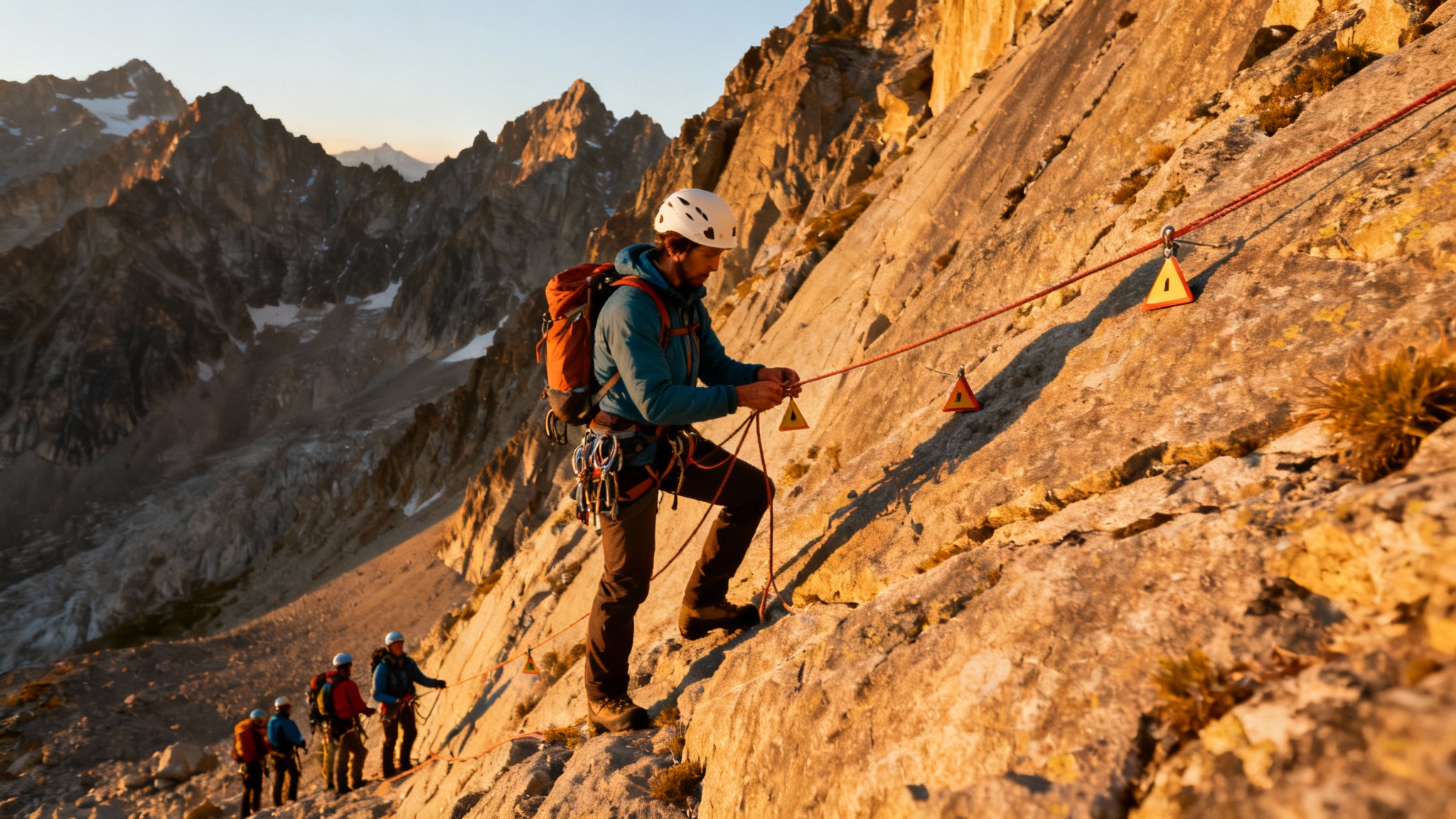
Expedition Pace
The biggest risk isn’t trekkers refusing to move. It’s scouts burning out before they can report back.
An 8-month ethnographic study (Harvard Business Review, 2026) found that AI’s most enthusiastic adopters don’t work less. They experience work intensification — absorbing extra roles, losing recovery time, and burning out while feeling productive.
“You don’t work less. You just work the same amount or even more.”
Scouts absorb work from other roles because AI makes it feel newly accessible. What starts as exploration becomes permanent scope enlargement.
AI’s conversational ease makes work ambient. Scouts prompt during lunch, between meetings, during downtime. Recovery time disappears.
Running parallel AI threads feels productive but fragments attention. The “partner” sensation masks genuine fatigue.
Summit’s Expanded Role: Pace-Setting
Leadership doesn’t just set the destination — they protect the expedition from overextension.
Intentional Pauses
Structured checkpoints at each camp to assess alignment and reconsider assumptions before ascending. Real expeditions have mandatory rest at each camp. Yours should too.
Sequencing
Protect focus windows, batch distractions, regulate work timing. Scouts can’t pathfind effectively while context-switching constantly.
Human Grounding
Institutionalize connection time, dialogue, and shared reflection. AI-mediated work is individualizing by nature. Deliberate team connection counteracts this.
Without intention, AI makes it easier to do more — but harder to stop. Summit’s job is to make sure the expedition reaches the top with the team intact, not just fast.
The Staged Journey
Progress happens in deliberate stages, not giant leaps
Base Camp: Where You Are Now
Current state assessment. What does your organization look like today? What are the manual processes, current pain points, and existing AI experimentation?
Example: Manual proposals, basic AI research, inconsistent tool usage
Camp 1: The Next Logical Step
Not a massive transformation—the next achievable advancement. What’s the route scouts need to build first?
Example: AI-assisted proposals, automated client research, standardized prompts
Camp 2: Where Scouts Explore
The horizon scouts are testing while trekkers move to camp 1. This keeps the organization advancing continuously.
Example: AI-generated strategies, automated reporting, workflow automation
Summit: The Strategic Destination
Leadership’s vision for 18 months from now. What capabilities, offerings, and competitive advantages await at the top?
Example: AI-native operations, self-improving systems, transformed client experience
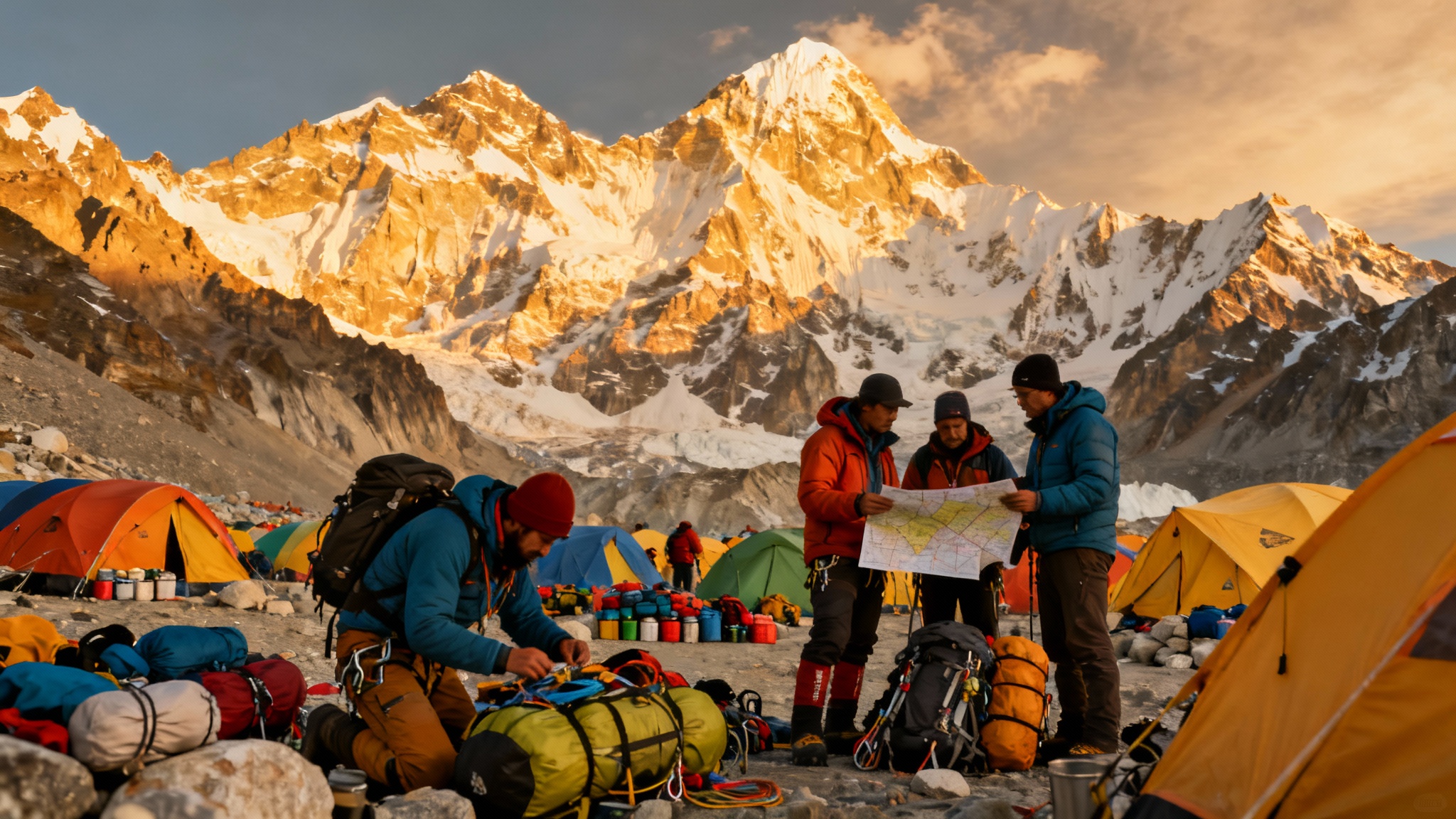
90-Day Expedition Launch
A practical timeline for beginning your coordinated AI transformation
Establish the Route
- •Scouts test and document path from base camp to camp 1
- •Create route maps for common challenges
- •Weekly scout reports to leadership
Move the Expedition
- •Trekkers follow scout-created routes
- •Regular check-ins and route improvements
- •Scouts begin exploring camp 2
Establish Camp 1
- •Organization settles into new capabilities
- •Measure performance improvements
- •Scouts report on camp 2 possibilities

The Key Insight
This isn’t about individual AI adoption. It’s about coordinated expedition movement.
Scouts pathfind. Trekkers follow proven routes. Leadership maintains vision and brings people along. Everyone has a role. Everyone moves forward together. No one gets left behind.
The organizations that succeed aren’t hoping individual climbers figure it out alone. They’re running coordinated expeditions.
What Scouts Actually Do All Day
Summit-Scouts-Trekkers tells you who does what. SCOUT is the framework a scout uses on each individual task: five steps that turn a vague ask into work AI can actually do well.
Lead your team’s AI expedition.
Join a few hundred marketers and business owners building AI into their day-to-day work, with the brain, all scripts, courses, and a private community.